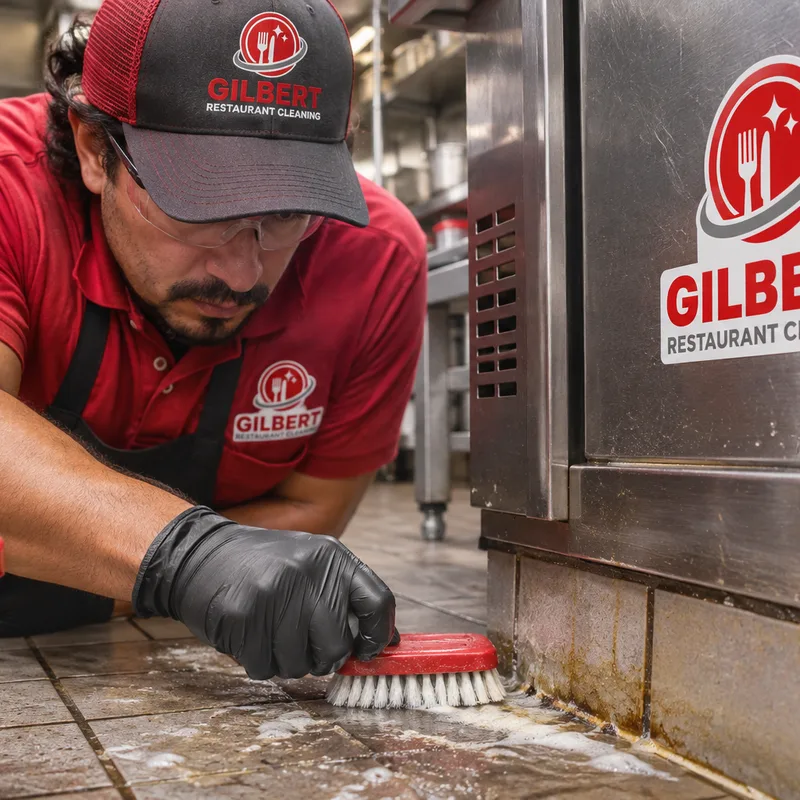
Kitchen Floors
Degreasing, scrubbing, edge work, and removal of soil around approved movable equipment. Special attention can be given to grout lines, corners, transitions, and safe walking paths.
Serving Gilbert, Arizona & surrounding areas
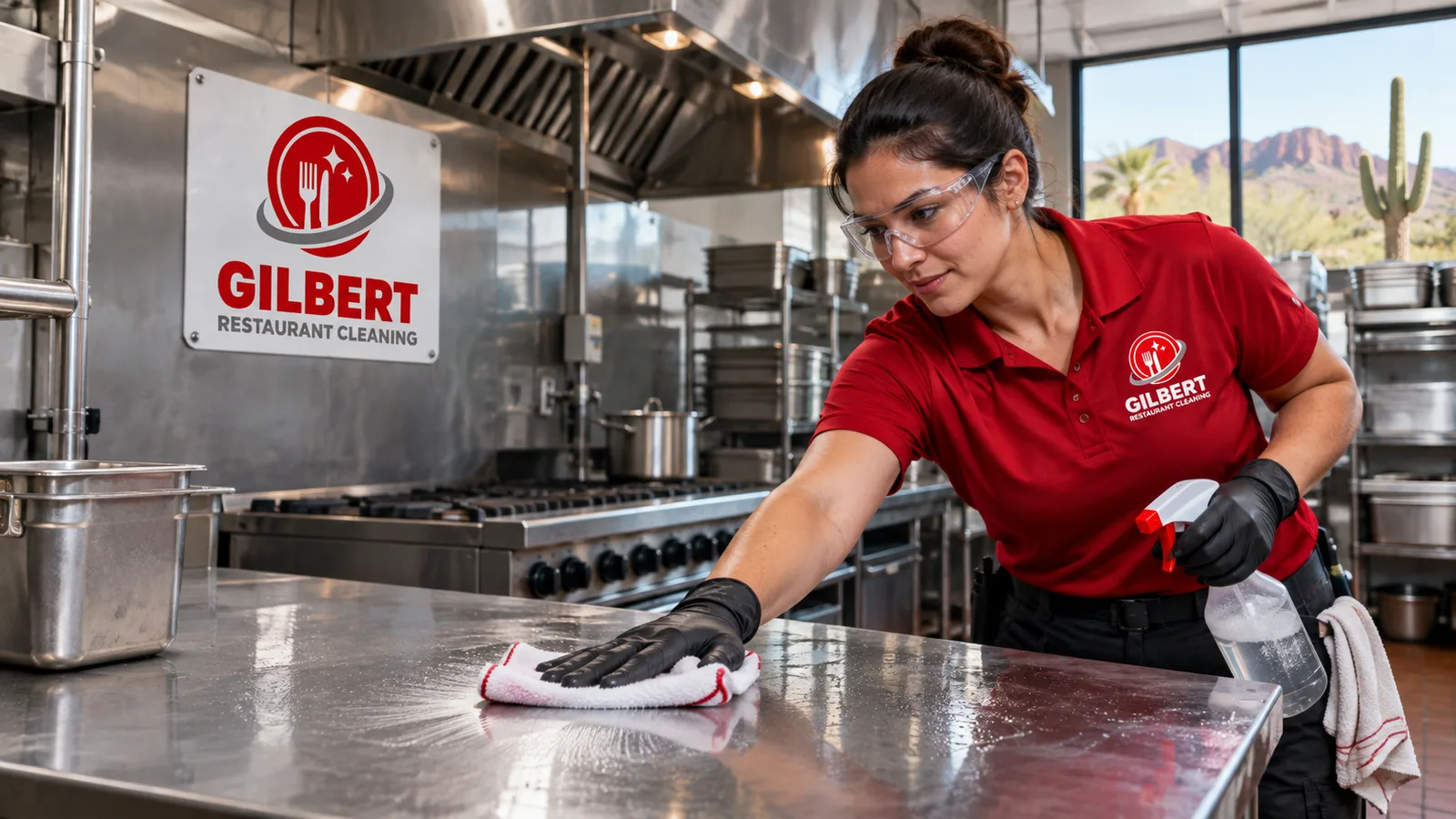
Restaurant cleaning · Phoenix, Arizona
Dependable cleaning for dining rooms, food-preparation areas, floors, restrooms, and the hard-to-reach surfaces that need regular attention.
Built around operating hours
Restaurant Cleaning Phoenix businesses rely on should support the way a working restaurant operates. Gilbert Restaurant Cleaning develops written scopes around your floor plan, operating hours, surface types, and recurring problem areas. The goal is a repeatable routine that helps your staff open to a cleaner dining room and back-of-house workspace.
Our work can cover customer-facing and food-service areas without treating every surface the same. Dining-room floors need a different method than quarry tile near a cook line. Stainless steel, sealed concrete, rubber mats, restroom fixtures, glass, and touchpoints each require suitable products and tools. Before recurring work begins, Gilbert's restaurant specialists review the facility and clarify which tasks are included, how often they occur, and which areas require special access.
We are based at 725 W. Commerce Ave., Suite 5 in Gilbert. That location supports restaurants in Gilbert and the greater Phoenix area, including independently operated dining rooms, quick-service businesses, cafés, bars, and multi-unit facilities. Scheduling can be arranged around opening, closing, prep, and delivery activity so cleaners are not competing with your busiest work.
Complete facility care
A restaurant needs more than a quick pass over visible surfaces. Grease travels beyond the cooking line, crumbs collect beneath fixed furnishings, and floor edges often receive less attention during routine staff cleaning. A professional scope identifies those details and assigns them to daily, weekly, or periodic service.
Front-of-house cleaning may include hard-floor care, carpet vacuuming, tables and seating, baseboards, interior glass, entry areas, counters, and high-touch surfaces. Restroom work can address fixtures, partitions, mirrors, dispensers, floors, and odor-producing residue around toilets or urinals.
Back-of-house service may include degreasing accessible surfaces, cleaning floors and floor edges, wiping equipment exteriors, detailing sinks and non-food-contact surfaces, and cleaning beneath movable items when access is approved. The exact scope should distinguish routine janitorial work from specialized services that require equipment shutdown, disassembly, or a qualified trade. Hood and exhaust-system cleaning, pest treatment, and equipment repair are separate disciplines and should not be implied by a general cleaning agreement.
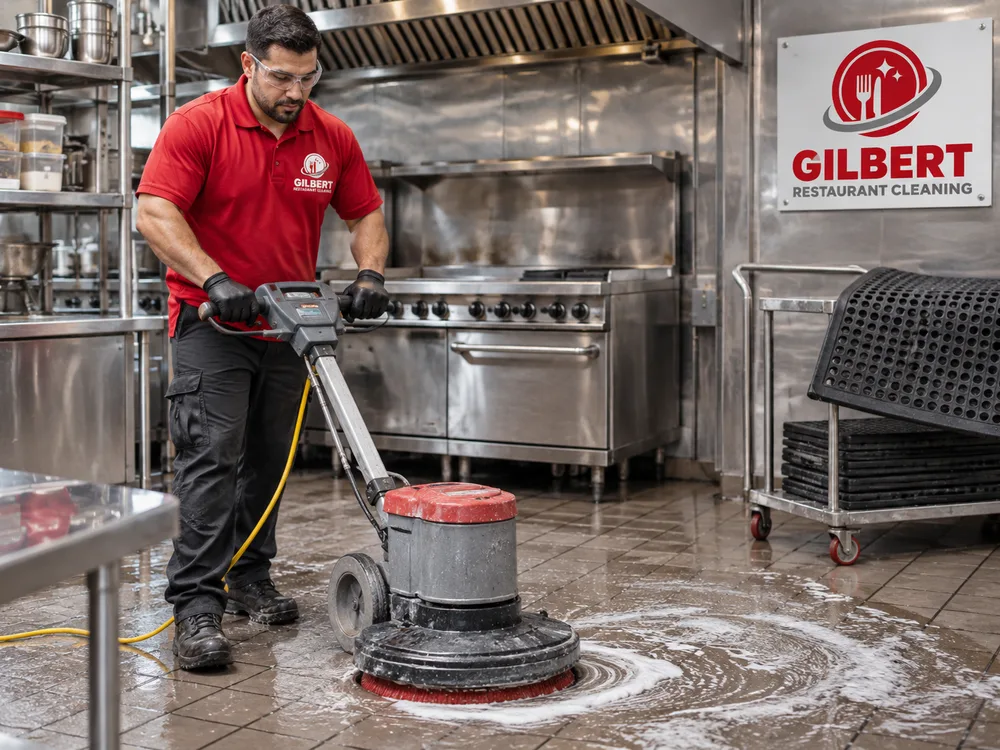
Detailed capabilities
Degreasing, scrubbing, edge work, and removal of soil around approved movable equipment. Special attention can be given to grout lines, corners, transitions, and safe walking paths.
Cleaning of stainless steel, splash areas, shelves, equipment exteriors, doors, handles, and other accessible surfaces listed in the scope. Food-contact surfaces require approved procedures and coordination with restaurant staff.
Care for floors, seating, tables, counters, entry glass, ledges, and touchpoints helps maintain a consistent appearance after a busy service period.
Cleaning can cover fixtures, partitions, mirrors, dispensers, doors, floors, and commonly touched surfaces, with supplies handled according to the agreed scope.
Baseboards, floor edges, wall spotting, vents, high dusting, and buildup behind movable objects can be assigned to a rotation instead of being rushed during every visit.
Interior waste receptacles and designated collection areas can be cleaned as agreed. Exterior grease containers and regulated waste handling may require separate arrangements.
A defined process
Step 1 of 5
We review the dining room, kitchen, restrooms, entrances, storage access, and waste-handling areas included in the job. Surface condition, equipment placement, floor drains, security procedures, and operating hours are discussed before pricing.
Step 2 of 5
The written scope separates recurring tasks from periodic detail work. It also identifies exclusions and any areas that restaurant staff must clear, cool down, lock out, or make accessible before cleaners arrive.
Step 3 of 5
Service is placed around closing, opening, food prep, deliveries, and alarm requirements. Phoenix-area restaurants may also need floor care timed so surfaces are dry before early-morning staff or vendors enter.
Step 4 of 5
The crew follows the task list using products and equipment suited to the listed surfaces. Separate tools or color-coded microfiber can be used to reduce cross-contact between restroom, dining, and kitchen work zones.
Step 5 of 5
A recurring plan should change when hours, traffic, menus, equipment, or floor conditions change. Service notes and direct feedback help keep the scope aligned with the facility rather than allowing neglected tasks to accumulate.
Phoenix operating conditions
Phoenix-area restaurants contend with fine desert dust that enters through doors, loading areas, and ventilation pathways. During dry or windy conditions, entry floors and ledges can need more frequent attention. Dust mixed with airborne cooking residue creates an adhesive film on elevated surfaces, equipment exteriors, and floor edges, so dry dusting alone may not remove it.
Monsoon-season rain can also carry grit and moisture through entrances. Appropriate matting, prompt soil removal, and floor procedures matched to the finish help limit abrasive wear and slippery residue. Cleaners should follow product dwell times and avoid leaving excess solution where staff will soon be walking.
Local operations differ across the metro. Restaurants near Downtown Gilbert's dining activity may have concentrated evening traffic and late closing routines. Downtown Phoenix venues may need service coordinated with parking, secured building access, or events. Chandler and Mesa restaurants often include freestanding and shopping-center locations where loading access and property-management rules affect arrival. These conditions matter when setting crew size, equipment, and realistic service windows.
Clear responsibilities
Commercial cleaning supports sanitation, but it does not replace the restaurant operator's food-safety program. The person in charge remains responsible for procedures involving food-contact surfaces, chemical storage, warewashing, contamination response, and employee practices. A cleaning scope should state who handles each task and which chemicals are approved for use in each area.
Cleaning and sanitizing are separate steps. Cleaning removes food residue, grease, and soil. Sanitizing follows cleaning on applicable food-contact surfaces and must use an appropriate product at the concentration and contact time shown on its label. Mixing chemicals or using a sanitizer on a visibly dirty surface is not an acceptable shortcut.
Restaurants within Phoenix are regulated through Maricopa County Environmental Services. A cleaning provider should never promise an inspection outcome, but consistent housekeeping can help a facility address visible soil, buildup, clutter, and sanitation tasks before they become persistent problems. Staff should also retain responsibility for temperature control, warewashing verification, and any task that requires food-handling authority.
A good written agreement identifies food-contact exclusions, equipment that cannot be moved, shutdown requirements, and responsibility for replacing supplies. It also explains whether the crew provides chemicals and tools or uses products approved by the facility.
Clear quote comparisons
Restaurant cleaning is usually quoted after a walkthrough because square footage alone does not describe the work. The number of restrooms, dining-room configuration, kitchen condition, floor material, grease accumulation, service frequency, equipment clearance, and available cleaning window all affect labor and equipment needs.
A compact restaurant with open floors may take less time than a similar-sized facility filled with fixed booths, mats, narrow equipment gaps, and heavily soiled grout. One-time restorative cleaning also differs from recurring maintenance. An initial service may require concentrated degreasing and detail work before a predictable routine can maintain the result.
Ask for a written scope that names recurring tasks, periodic tasks, exclusions, access responsibilities, and frequency. Comparing quotes by price without comparing those details can hide major differences. Gilbert Restaurant Cleaning can assess your facility and provide a plan based on its actual condition and operating schedule.
A facility walkthrough turns a general request into a clear cleaning scope, realistic schedule, and service plan built around your operation.
Call for a Free QuoteCommon questions
The right frequency depends on operating hours, customer volume, menu, floor type, and how much cleaning employees complete between services. Busy dining rooms and grease-producing kitchens may need recurring service several times each week, while detail tasks can rotate less often. Fine desert dust and seasonal tracked-in grit may justify extra entry and floor attention at certain times.
Yes, after-hours cleaning can be planned around closing duties, alarms, key access, equipment cooldown, and the next prep shift. The walkthrough should establish who secures the building, which equipment may be touched, and how much drying time floors have before employees return.
Routine kitchen cleaning does not automatically include hood ducts, exhaust fans, or complete grease-removal systems. Those components often require specialized access, documentation, and procedures. The written scope should state whether work is limited to accessible exterior surfaces or includes a separately qualified exhaust-system service.
Food-contact work must be specifically assigned and coordinated with the restaurant's person in charge. Surfaces need to be cleared of food and utensils, cleaned first, and then sanitized with an appropriate product according to its label. Maricopa County food-safety requirements still remain the operator's responsibility.
The restaurant should remove or protect exposed food, complete required equipment shutdowns, identify surfaces that are unsafe to move, and provide agreed access. Staff should also secure knives, cash, personal items, and confidential materials. These steps let the cleaning crew focus on the approved task list.
Timing depends on the facility size, condition, layout, crew size, and assigned tasks. An initial deep clean generally needs more time than recurring maintenance because accumulated grease, grout soil, floor edges, and hard-to-reach surfaces require focused work. A walkthrough provides the best basis for setting a realistic service window.
A one-time initial clean is often appropriate when buildup exceeds what routine maintenance can address during the normal service window. The assessment can separate restorative work from recurring tasks, allowing future visits to follow a more predictable schedule.
Tell Gilbert Restaurant Cleaning about your hours, floor plan, current trouble spots, and preferred service schedule. We will help define a written scope for your Phoenix-area facility.