
Kitchen Floor Degreasing
Food-safe work practices, compatible degreasers, proper dwell time, mechanical agitation, and controlled soil recovery target oily buildup around cook lines, prep areas, dish stations, and walkways.
Serving Gilbert, Arizona & surrounding areas
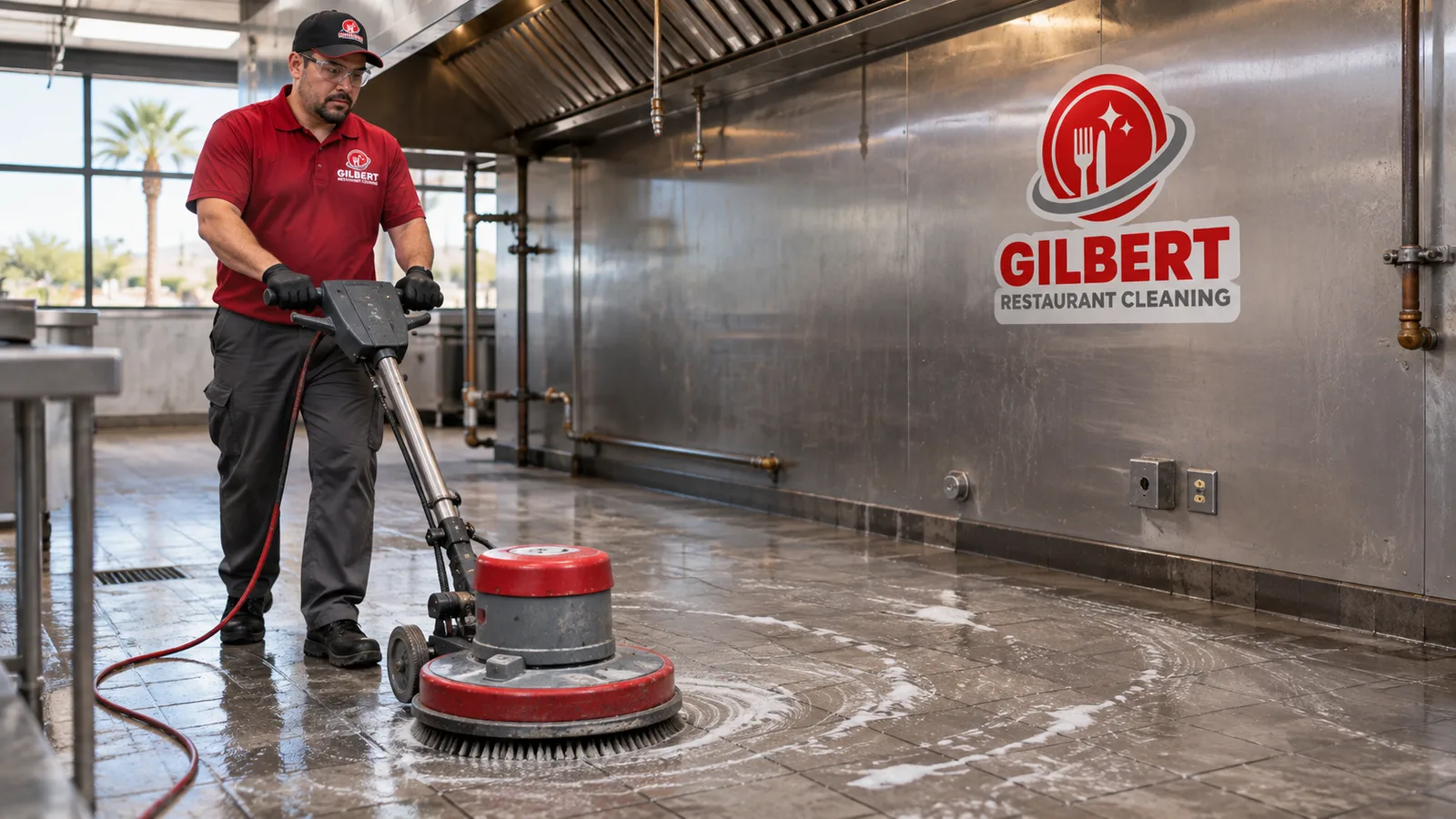
Restaurant floor cleaning · Gilbert, Arizona
Remove bonded grease, restore tile and grout, and build a cleaning schedule around your kitchen's operating hours.
Built around restaurant hours
Restaurant Floor Cleaning Services address the soils and safety concerns that ordinary mopping leaves behind. Cooking oil, tracked-in grit, food residue, and detergent buildup can collect on tile, in grout joints, beneath movable equipment, and along wall edges. Gilbert Restaurant Cleaning uses commercial kitchen floor cleaning methods selected for the floor material, soil load, and operating schedule.
Our restaurant specialists serving Gilbert plan the work around access, service hours, and required drying time. Before cleaning starts, the team identifies sensitive surfaces, drains, transitions, loose grout, damaged tiles, and areas that need extra degreasing. This inspection helps establish a practical scope rather than applying one chemical and one method to every surface.
The address at 725 W. Commerce Ave., Suite 5 places the team near the commercial corridors around downtown Gilbert and the Heritage District, where restaurants often need floor work completed between meal periods or after closing. Service can also be planned for dining businesses near SanTan Village, where heavy guest traffic makes entry and dining-room floor appearance a daily concern. Gilbert's dry, dusty conditions add fine abrasive soil at entrances, so effective care often combines interior degreasing with detailed cleaning at thresholds and traffic lanes.
Tile and grout detail
Porous grout can hold dark soil even when the face of the tile looks clean. Restaurant grout cleaning starts with dry soil removal, followed by application of a compatible alkaline cleaner or degreaser. The product needs enough dwell time to loosen oily residue before agitation. Grout brushes, rotary machines, or oscillating equipment may be used according to the tile, joint condition, and available clearance.
The loosened soil must then be recovered rather than spread across the floor. Controlled rinsing and wet extraction remove suspended grease and detergent residue. Edges, corners, floor-to-wall transitions, and the spaces around fixed equipment receive separate attention because large machines cannot reach them. Fans or air movers may be used to shorten drying time when conditions permit.
Ceramic and porcelain tile commonly tolerate methods that would be unsuitable for natural stone, resilient flooring, or damaged grout. A spot test helps confirm chemical compatibility. Cleaning can improve stained grout, but it cannot repair cracked joints, replace missing grout, or reverse permanent discoloration. Those conditions are documented so the cleaning plan stays realistic.
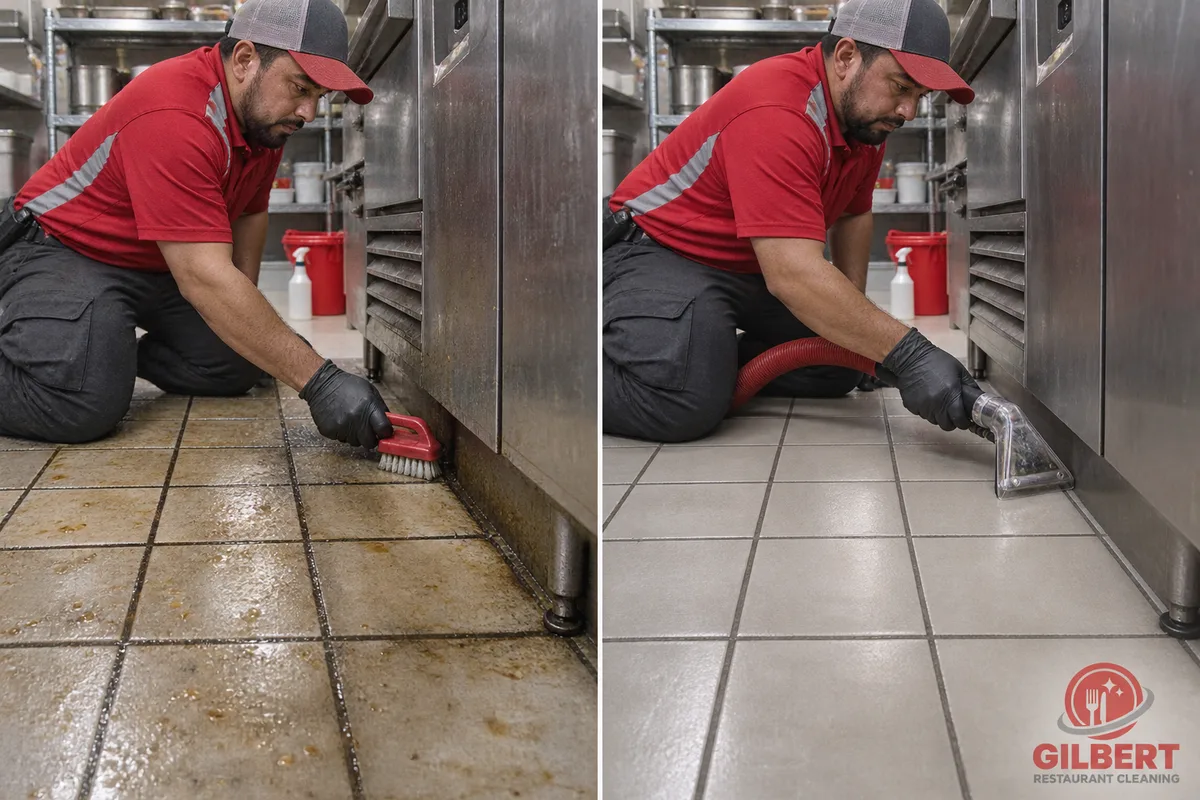
Detailed capabilities
Food-safe work practices, compatible degreasers, proper dwell time, mechanical agitation, and controlled soil recovery target oily buildup around cook lines, prep areas, dish stations, and walkways.
Traffic lanes, table areas, entry floors, and perimeter edges are cleaned according to the surface type. The schedule can be arranged to reduce interference with guests and staff.
Grout brushes and suitable machine agitation loosen embedded soil. Corners, coves, transitions, and other machine-inaccessible areas receive focused detail work.
Cleaning can cover storage routes, server stations, beverage areas, and other back-of-house zones where tracked grease and spills create recurring buildup.
Scheduled deep service supports routine staff mopping by removing residue that accumulates over time. Frequency depends on cooking volume, floor texture, traffic, and daily maintenance.
Loose tile, failed grout, damaged transitions, and drainage concerns can be noted before work begins. Cleaning does not conceal defects that require repair.
A defined process
Step 1 of 5
The team reviews floor materials, grease concentration, grout condition, drains, equipment clearance, entry points, and access restrictions. The restaurant's closing time and reopening needs are considered before the schedule is set.
Step 2 of 5
Loose debris is removed, movable items are addressed according to the agreed scope, and sensitive surfaces are protected. Warning signs and work-zone controls help keep staff out of active cleaning areas.
Step 3 of 5
A cleaner suited to the floor and soil is mixed and applied according to its label. Adequate dwell time lets the chemistry break down residue before agitation begins. Chemicals are never mixed unless the manufacturer specifically permits it.
Step 4 of 5
Appropriate pads, brushes, or compact equipment work the floor surface and grout. Technicians detail edges, corners, coves, and areas around fixed equipment separately.
Step 5 of 5
Liquefied soil and spent cleaning solution are recovered, followed by controlled rinsing when the system calls for it. The floor is left to dry before normal traffic resumes, and any pre-existing damage or remaining permanent stains are reviewed.
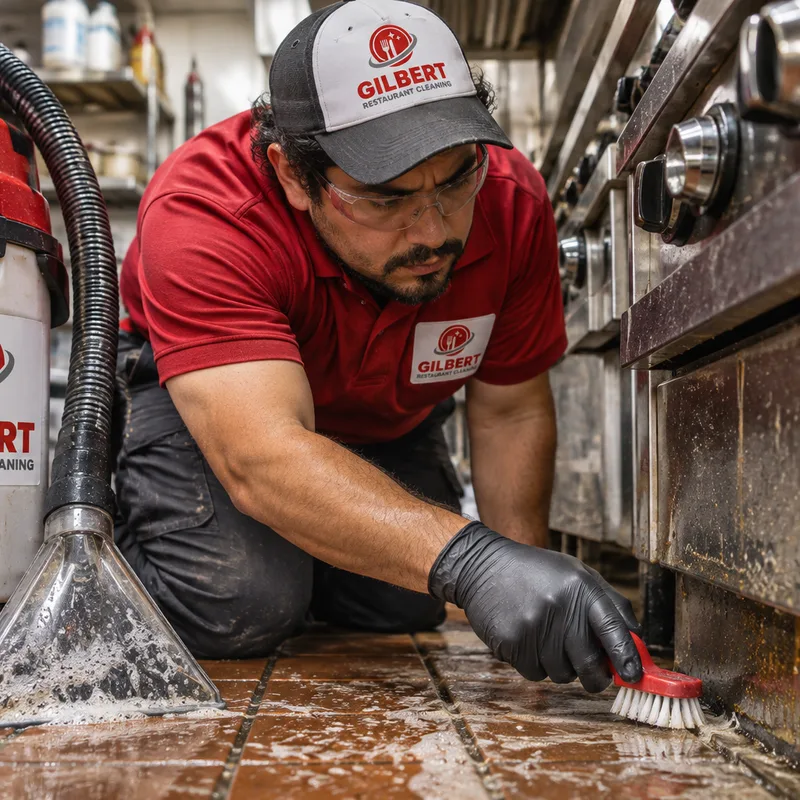
Controlled grease removal
Grease removal depends on chemistry, temperature, dwell time, agitation, and recovery working together. Adding more degreaser without improving the rest of the process can leave residue, affect slip resistance, or damage a surface. Restaurant floor degreasing should use the least aggressive effective method and follow the product label, equipment guidance, and the flooring manufacturer's care requirements.
Cook-line buildup may need repeated controlled passes. Dish areas can contain a different mix of fats, food soil, detergent residue, and mineral deposits. Entry floors near Gilbert's major commercial areas often carry dry grit that should be removed before wet cleaning begins. Treating these zones separately produces a more consistent result than flooding the entire kitchen with one solution.
Drain protection and wastewater handling also belong in the work plan. Soil should be recovered with appropriate wet-extraction equipment rather than pushed indiscriminately toward a drain. Restaurant managers should disclose damaged drains, known backups, sensitive equipment, and any facility rules before service begins.
Cleaning frequency
The right frequency is based on cooking methods, daily traffic, floor texture, ventilation performance, staff mopping practices, and how quickly grease migrates beyond the cook line. A high-volume kitchen with fryers may need more frequent kitchen floor degreasing than a dining business with limited cooking. Textured tile may also hold soil more readily than a smooth surface.
Many operators use routine staff cleaning during the week and schedule periodic machine cleaning for bonded residue and grout. A written scope should identify the rooms included, whether equipment will be moved, who handles movable items, which stains may be permanent, and when the area can reopen. It should also distinguish cleaning from tile repair, grout replacement, sealing, or floor refinishing.
Seasonal dust in the Phoenix area can increase the amount of grit carried through entrances, especially during windy periods and monsoon storms. Walk-off mats and frequent dry soil removal help keep that grit from reaching dining-room traffic lanes. In areas near SanTan Village and downtown Gilbert, scheduling may also need to account for evening crowds, deliveries, and narrow turnaround times between closing and morning preparation.
Planning your budget
Restaurant floor cleaning in Gilbert typically ranges from $300 to $1,200 per visit, while large kitchens, extensive grout detailing, or severe grease buildup may cost more. A smaller dining area or light periodic cleaning may fall near the lower end; a full back-of-house deep clean generally falls higher.
Final price depends on square footage, floor material, soil level, equipment clearance, furniture movement, access, required drying time, and service frequency. The exact cost is confirmed after an inspection and written scope.
Get a cleaning plan that identifies the work areas, floor methods, scheduling needs, and expected drying time before service starts.
Call for a Free QuoteCommon questions
Yes, service can often be scheduled after closing when access and drying time allow. Gilbert restaurants with early preparation shifts should provide the required reopening time so the crew can plan degreasing, extraction, and drying without interfering with kitchen setup.
A defined kitchen zone may take several hours, while a large restaurant or heavy grease removal can require a longer service window. Square footage, floor texture, equipment clearance, grout condition, soil recovery, and drying time all affect the schedule.
Degreasing can remove oily residue that contributes to slippery conditions, but it cannot correct worn flooring, poor drainage, damaged tile, unsuitable footwear, or active spills. The floor should be kept out of service until it is dry, and ongoing spill response remains necessary after professional cleaning.
Equipment movement must be agreed upon before the service because utility connections, weight, casters, and manufacturer requirements affect what can be moved safely. The written scope should state which items restaurant staff will clear and which accessible areas the cleaning team will handle.
No, cleaning removes soil but cannot guarantee removal of permanent discoloration, chemical damage, or stains that have penetrated compromised grout. A test area can show the likely result, while cracked or missing grout may need repair before aggressive cleaning.
Staff should remove loose inventory and small movable items, identify sensitive equipment, disclose damaged drains or tiles, and keep the work zone unavailable during cleaning and drying. Access instructions are especially useful when service occurs after closing in downtown Gilbert or near SanTan Village.
The schedule should be based on visible grease return, grout darkening, cooking volume, traffic, and the effectiveness of daily maintenance. A site inspection can establish a starting interval, then the frequency can be adjusted according to actual floor conditions rather than a fixed calendar.
Tell Gilbert Restaurant Cleaning about your floor material, kitchen layout, problem areas, and operating hours. The next step is a clear scope built around access, degreasing needs, and realistic drying time.