Cooking-Line Exteriors
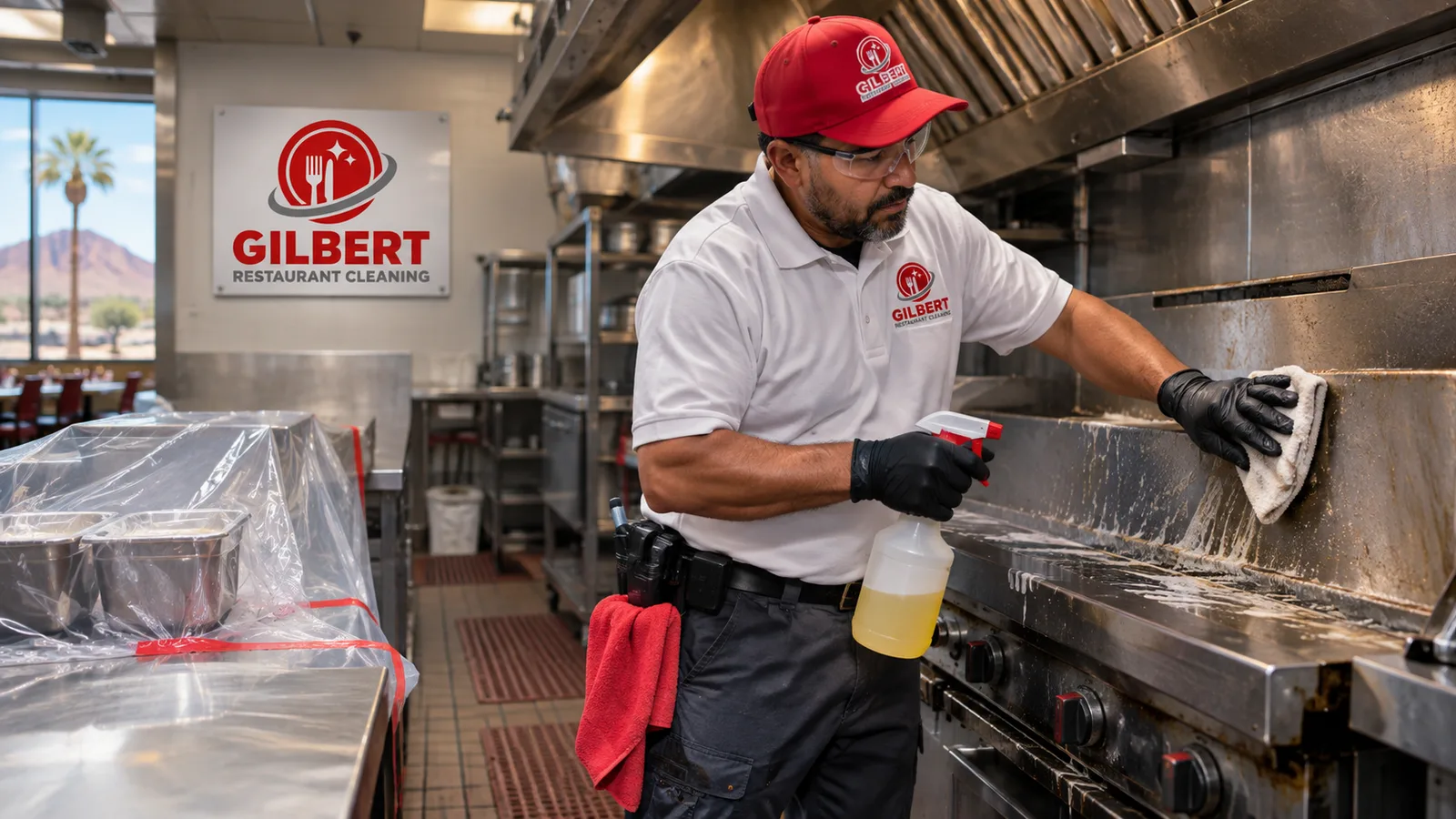
Degreasing for accessible exterior surfaces on ranges, fryers, ovens, grills, and nearby stainless steel. Controls and sensitive components require careful hand cleaning rather than uncontrolled spraying.
Serving Gilbert, Arizona & surrounding areas
Restaurant kitchen cleaning · Glendale, Arizona
Detailed degreasing and high dusting for hard-working commercial kitchens, with a written scope built around your equipment, access, and operating schedule.
Built around your operation
Restaurant Kitchen Cleaning Glendale service should address the grease, carbon residue, dust, and food debris that routine shift cleaning may leave behind. Gilbert Restaurant Cleaning develops a defined scope for cooking lines, equipment exteriors, floors, walls, overhead surfaces, and other agreed areas. The goal is a visibly cleaner workspace without treating every kitchen as if it has the same layout or soil level.
Our work starts with the conditions inside your facility. We consider the cooking volume, equipment arrangement, buildup, surface materials, access restrictions, and hours available for cleaning. With practical attention to travel, timing, and reopening needs, an experienced restaurant team in Gilbert, AZ coordinates service for Glendale kitchens across the Phoenix metropolitan area.
The written scope identifies what is included before work begins. It can also identify exclusions or items that require separate specialist service, such as internal exhaust-system cleaning. This distinction matters because wiping an accessible hood exterior is different from cleaning exhaust ducts and fans. Clear boundaries help restaurant operators compare proposals and prepare staff properly.
Targeted degreasing
Cooking lines collect different soils in different places. Aerosolized grease settles on equipment sides, control panels, walls, shelving, pipes, and ledges. Carbonized residue may require dwell time and repeated agitation, while loose crumbs and dry debris should be removed before wet cleaning begins.
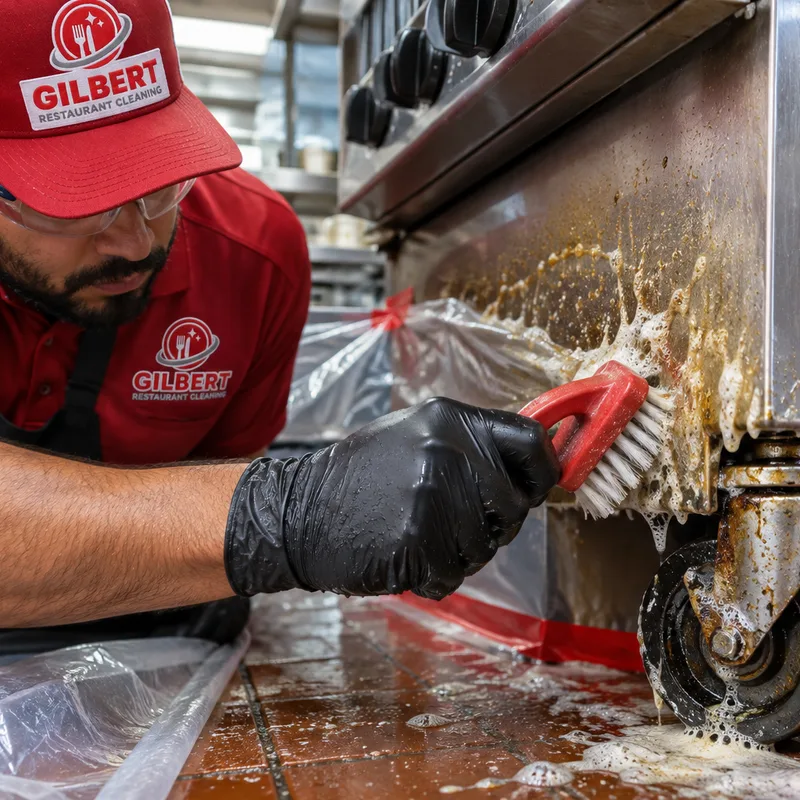
Depending on the agreed scope, cleaning may cover range and fryer exteriors, stainless-steel work surfaces, backsplash areas, equipment legs and casters, accessible spaces beneath movable units, floor edges, washable walls, doors, kick plates, and drains. Degreasers must be selected for the surface and soil. Stainless steel, painted metal, aluminum, tile, and resilient flooring do not all tolerate the same chemical strength or abrasive action.
Food, utensils, and exposed food-contact items should be removed or protected before work starts. Cleaners also need to keep chemical use separate from active food preparation. For kitchens with heavy accumulation, a test area can establish the right dilution, dwell time, and agitation method before the full area is treated.
Detailed capabilities
Degreasing for accessible exterior surfaces on ranges, fryers, ovens, grills, and nearby stainless steel. Controls and sensitive components require careful hand cleaning rather than uncontrolled spraying.
Removal of loose debris followed by treatment of greasy traffic areas, wall edges, corners, equipment legs, and accessible spaces beneath movable units.
Cleaning of agreed backsplash areas, tile, doors, partitions, and other washable surfaces affected by splatter or airborne cooking residue.
Removal of settled dust and grease from empty, accessible shelves, pipes, conduit, ledges, and structural surfaces included in the work plan.
Focused agitation around handles, hinges, kick plates, casters, seams, and junctions where buildup can resist ordinary wiping.
Review of the agreed work areas after cleaning, with any access limitations or remaining permanent staining documented.
Overhead detail work
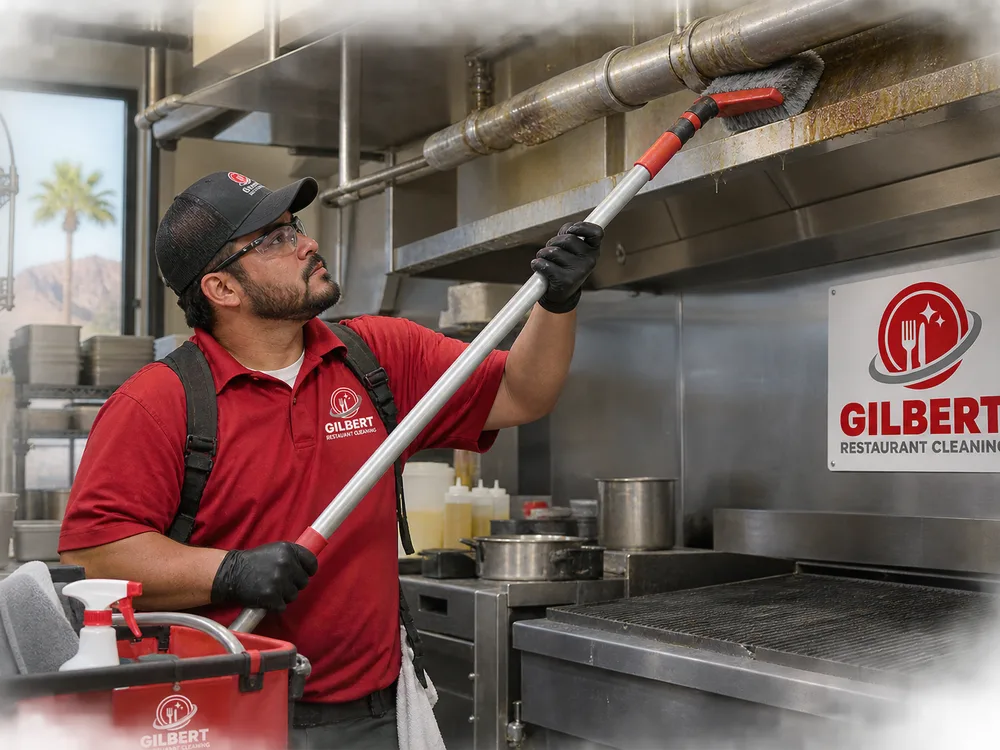
Restaurant High Dusting Glendale service targets accessible overhead areas where dust and grease can collect beyond normal reach. Common candidates include exposed pipes, conduit, duct exteriors, light housings, ceiling vents, beams, ledges, and the tops of cabinets or equipment. The exact list depends on the kitchen design and safe access.
Glendale's dry desert conditions can contribute to airborne dust, while cooking vapor adds a sticky film that traps particles on elevated surfaces. That combination may require vacuuming or controlled dry removal before degreasing. Starting high and working downward prevents loosened debris from falling onto freshly cleaned lower areas.
High dusting requires more than a long-handled duster. The team must assess ladder placement, overhead obstacles, electrical fixtures, fire-suppression components, and the need to protect equipment underneath. Surfaces near exposed food or clean utensils should be isolated before overhead work begins. Areas that cannot be reached safely with the planned equipment should be identified during the initial review rather than improvised during service.
A defined process
Step 1 of 5
We assess the layout, surface materials, grease level, overhead conditions, equipment mobility, water access, and any restrictions on noise or cleaning chemicals.
Step 2 of 5
You receive a defined work plan based on the areas selected and the time available. Service can be coordinated around closure periods or other approved windows so the kitchen can be prepared in advance.
Step 3 of 5
Restaurant staff remove food and loose wares as agreed. Our team protects sensitive areas, confirms equipment status, and organizes the cleaning sequence to reduce cross-contamination.
Step 4 of 5
When overhead work is included, high dusting comes first. Degreasing, detail agitation, controlled rinsing or wiping, and floor cleaning then proceed through the approved work zones.
Step 5 of 5
We review the completed scope with the designated contact and note access problems, damaged finishes, permanent discoloration, or buildup that requires another treatment.
Local scheduling considerations
A restaurant near the Westgate Entertainment District may need cleaning scheduled around event-driven traffic and late operating hours. Downtown Glendale businesses may have tighter loading access or compact back-of-house layouts. Kitchens serving Arrowhead Towne Center and the surrounding Bell Road commercial area can face long service days that leave a narrow overnight work window. These conditions affect crew access, staging, and the amount of work that fits into one visit.
Preparation makes that window more productive. Before service, remove or secure food, utensils, small appliances, and loose storage from the selected areas. Identify equipment that staff are authorized to move or disconnect. Let us know about damaged flooring, loose wall finishes, active leaks, sensitive alarms, or areas controlled by another contractor.
Arizona heat also affects planning. Equipment must be cool enough to clean safely, but refrigeration and food-safety controls cannot be disrupted casually. The restaurant remains responsible for its food handling, temperature control, equipment shutdown, and restart procedures. We coordinate the cleaning plan with the authorized manager so those responsibilities are clear.
Clear expectations
Deep cleaning supports a cleaner working environment, but it does not replace the restaurant's daily sanitation program, pest-control plan, equipment maintenance, or required exhaust-system service. Food-contact surfaces may require the restaurant's approved wash, rinse, and sanitizing procedure after surrounding work is complete. Cleaning also cannot repair corrosion, failed grout, damaged coatings, leaking equipment, or permanently stained finishes.
Internal hood, fan, and duct cleaning is a distinct specialist scope. A general kitchen-cleaning proposal should state whether accessible hood exteriors are included and should never imply that exterior wiping satisfies a required exhaust-system cleaning. Fire-suppression nozzles and related components also require care and must not be altered during routine cleaning.
Results depend on surface condition and the age of the buildup. Fresh grease often responds differently than residue that has polymerized through repeated heating. A realistic proposal accounts for these conditions and avoids promising that every stain or damaged finish will return to a like-new appearance.
A clear kitchen-cleaning plan starts with the equipment, surfaces, buildup, access, and service window. Share those details to receive a scope designed around your Glendale operation.
Call for a Free QuoteCommon questions
Restaurant kitchen cleaning is priced by labor, scope, and site conditions rather than a reliable flat rate. The kitchen's size, grease accumulation, overhead work, equipment mobility, surface condition, parking or loading access, and available service window all affect the proposal. An on-site or detailed remote assessment is the best way to establish a written price for a Glendale restaurant.
Yes, service can often be planned during an approved closure window, subject to crew availability and the amount of work requested. Restaurants near Westgate may need to account for event nights, while businesses around Bell Road may have limited time between closing and morning preparation. The scope should match the time available rather than rushing a larger job.
A focused cleaning may fit within one closure window, while a larger kitchen or heavy grease and high-dusting scope may require additional time or phased visits. Layout, buildup, equipment movement, access height, and drying needs all affect duration. The expected working window is established after the kitchen and requested areas are reviewed.
It can include accessible ceilings, exposed pipes, conduit, beams, vents, light housings, and ledges when those items are named in the scope and can be reached safely. Greasy overhead surfaces may need controlled vacuuming followed by degreasing. Electrical components, suppression equipment, unstable finishes, and inaccessible areas may require exclusions or specialist handling.
Food, clean utensils, and loose preparation items should be removed or securely protected before cleaning begins. Equipment movement is decided during planning because some units are connected to gas, power, water, drains, or fire-suppression systems. Restaurant staff should handle shutdowns and disconnections unless another arrangement is expressly approved.
Internal hood, fan, and duct cleaning is not assumed to be part of general restaurant kitchen cleaning. Accessible hood exteriors may be included when the proposal says so, but internal exhaust work is a separate specialist service. Glendale operators should confirm the boundary in writing before work begins.
The right interval depends on cooking volume, menu, ventilation, operating hours, and the restaurant's daily cleaning program. Frying and high-heat cooking can create faster grease accumulation than lighter preparation. Regular inspections of equipment sides, overhead ledges, walls, and floor edges provide a better scheduling basis than choosing an arbitrary calendar interval.
Tell Gilbert Restaurant Cleaning about your kitchen layout, grease conditions, high-dusting needs, and preferred service window. We will use those details to define the work and prepare a clear plan.