Daily Restaurant Cleaning
Daily service addresses the steady flow of guests and employees. The scope can include full cleaning, disinfection, floor care, waste removal, and restocking after each service day.
Serving Gilbert, Arizona & surrounding areas
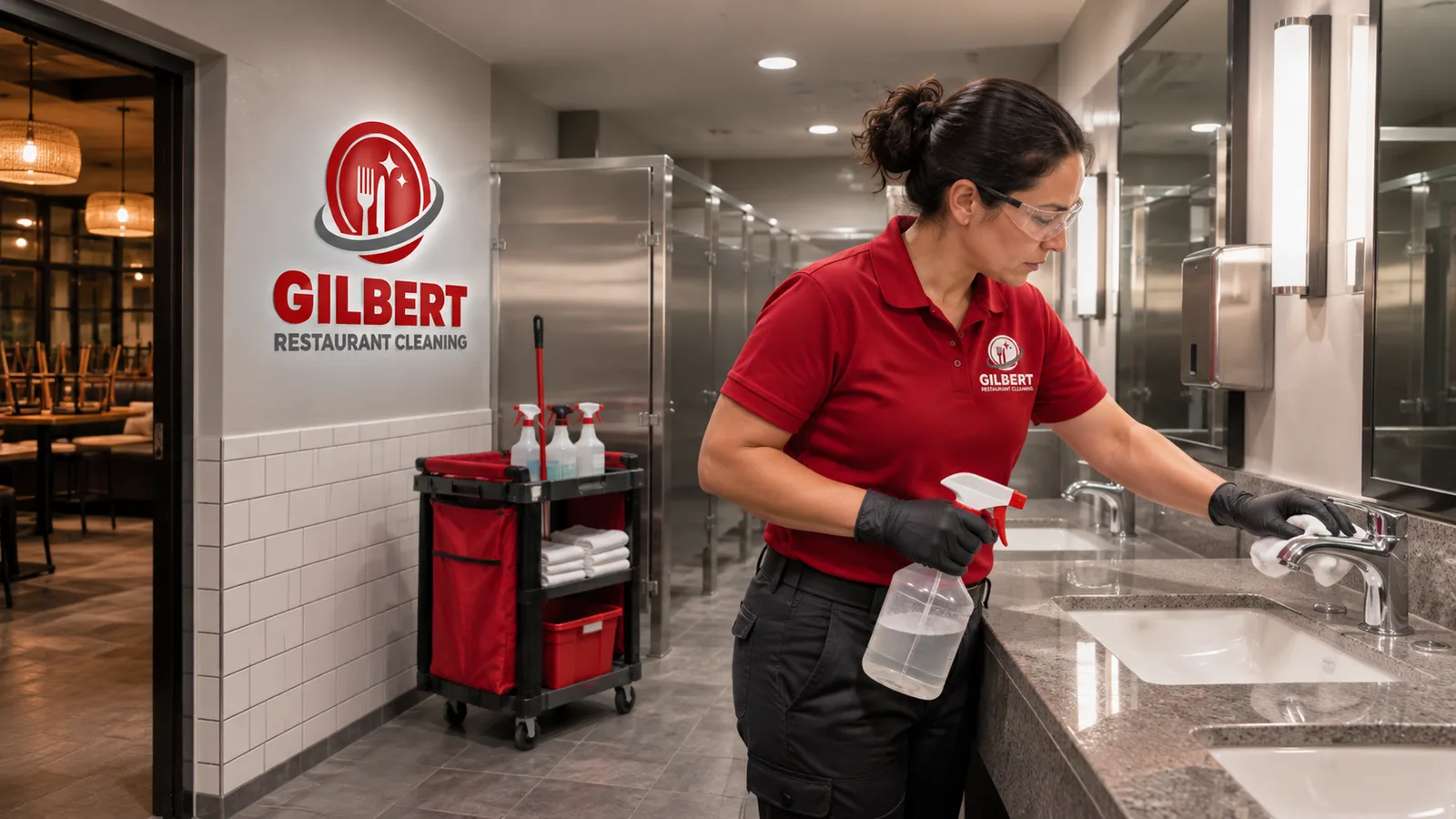
Restaurant restroom cleaning · Gilbert, Arizona
Keep guest and employee restrooms fresh, stocked, and ready for service with a cleaning schedule built around your operating hours.
Built around service hours
Restaurant Restroom Cleaning requires more than a quick wipe of the counters. Floors collect tracked-in grit, high-touch surfaces need proper disinfection, dispensers run low, and odors can return when drains, grout lines, partitions, or the bases of fixtures are missed. Gilbert Restaurant Cleaning creates a written restroom scope that identifies the fixtures, surfaces, consumables, and service frequency for each location.
Work can be completed daily, nightly, or overnight so cleaners do not interfere with guests or staff. Following an agreed checklist, Gilbert's trusted restaurant team coordinates access, alarm instructions, and completion windows with restaurant management. The goal is straightforward: every restroom should be clean, orderly, and ready when the doors open.
Gilbert's dry, dusty conditions add to the floor-care workload, especially near exterior entrances and during windy weather. Fine grit can settle along edges, under partitions, and around floor-mounted fixtures. A consistent routine prevents that soil from building up between occasional deep cleans.
A complete restroom scope
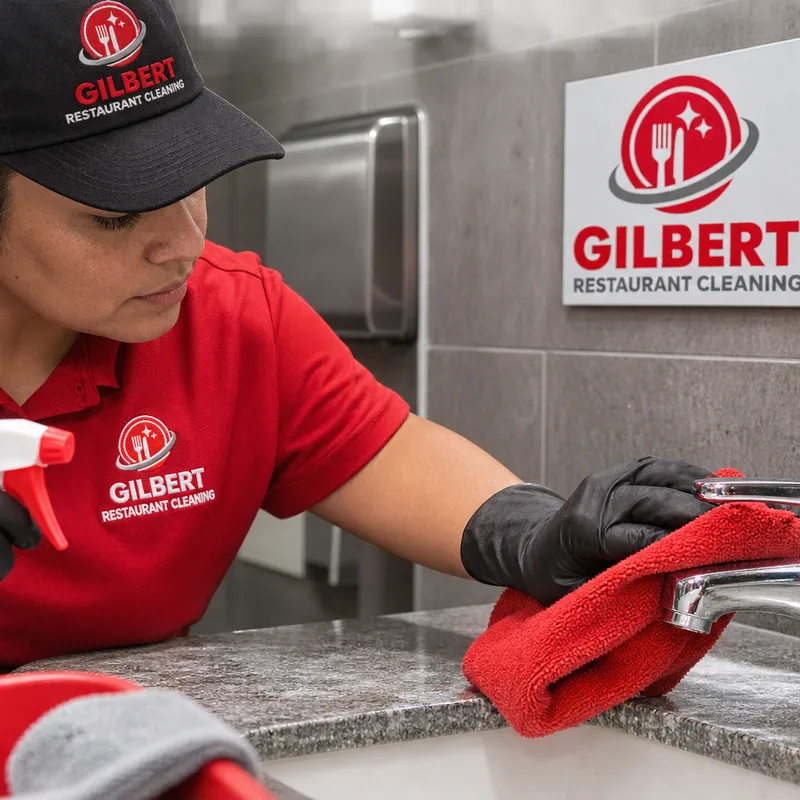
A typical scope includes cleaning and disinfecting toilets, urinals, sinks, faucets, counters, door handles, grab bars, partition latches, changing stations, and other high-touch points. Mirrors are cleaned without streaks, dispensers are wiped, trash and sanitary receptacles are emptied, and floors are vacuumed or swept before wet mopping.
The correct product and contact time matter. Disinfectant must remain visibly wet for the dwell time stated on its label, rather than being sprayed and immediately wiped away. Crews should also avoid using one cloth throughout the room. Color-coded microfiber and a clean-to-dirty sequence reduce the chance of carrying soil from toilets to sinks or handles.
Recurring work can include spot cleaning walls and partitions, removing buildup around fixture bases, cleaning floor edges, checking drain areas, and reporting leaks, damaged dispensers, loose seats, or persistent odors. Consumable restocking may be added when the restaurant supplies toilet tissue, hand soap, paper towels, liners, and sanitary products.
Scheduling options
Daily service addresses the steady flow of guests and employees. The scope can include full cleaning, disinfection, floor care, waste removal, and restocking after each service day.
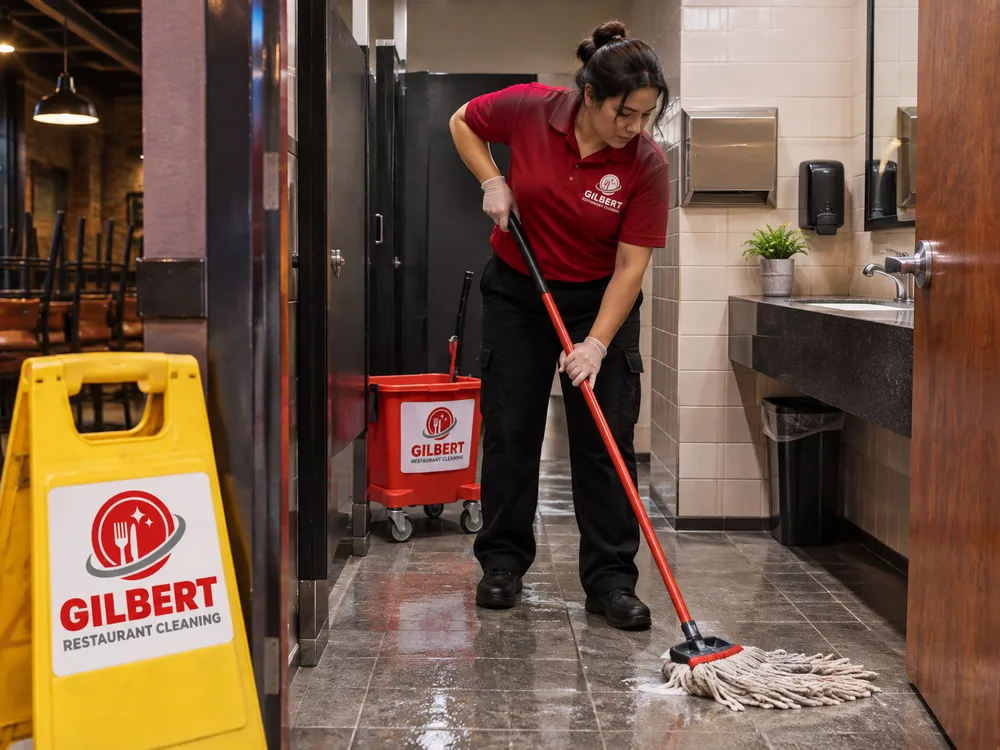
Nightly work begins after guests leave or during another agreed closure window. It gives the crew room to place wet-floor signs, clean thoroughly, and allow surfaces to dry before opening.
Overnight service suits late-closing or high-volume locations that need work completed before morning prep begins. Access procedures and alarm responsibilities are confirmed before the first visit.
A recurring plan keeps tasks from being skipped. Visit checklists can separate every-service duties from periodic detail work such as partition washing, grout attention, and floor-edge cleaning.
Cleaners can document restroom issues noticed during service, including plumbing leaks, empty dispensers, damaged hardware, or odors that remain after cleaning.
Separate checklists account for differences in fixture count, layout, employee facilities, customer facilities, and accessible stalls.
A defined start-up process
Step 1 of 5
We review fixture counts, flooring, partitions, dispensers, waste stations, access points, current condition, and any recurring problem areas. The walkthrough also identifies surfaces that require product-specific care.
Step 2 of 5
The written plan lists tasks, service frequency, consumable responsibilities, completion windows, and periodic detail work. Daily, restaurant night cleaning, and overnight options are matched to operating hours.
Step 3 of 5
Management provides the agreed entry method and instructions for keys, alarms, locked areas, and after-hours contacts. These details are settled before recurring work begins.
Step 4 of 5
The crew removes waste, cleans fixtures and touchpoints, services dispensers, and finishes with floor care. Wet-floor signs remain in place while floors are being cleaned and drying.
Step 5 of 5
Feedback from managers helps refine visit timing, supply levels, and periodic tasks. Seasonal traffic or a change in operating hours can be reflected in the service plan.
Clear expectations first
Restrooms have several contamination zones within a small footprint. A useful checklist defines what is cleaned, what is disinfected, which products are suitable for each surface, and when periodic work occurs. It should also distinguish routine soil from maintenance problems. Cleaning will not repair a leaking toilet seal, damaged grout, failing caulk, or a dry trap.
Odor control starts with removing the source. That may require attention around urinal bases, toilet hinges, floor edges, grout, waste receptacles, and drains. Fragrance alone can mask an odor for a short time, but it does not remove residue. If odor remains after a thorough cleaning, the crew should report it so management can investigate a plumbing or maintenance cause.
A professional restaurant janitorial company should also account for slip risk. Loose debris is removed before mopping, chemicals are diluted according to label directions, and floors are left free of excess solution. Product residue can attract soil and make some flooring feel tacky, so using more chemical is not a substitute for correct dilution and agitation.
Local scheduling fit
A restaurant near Downtown Gilbert's Heritage District may need restroom work timed around dinner traffic and evening activity. Locations near SanTan Village can have long retail dining hours, which may make overnight restaurant cleaning the practical choice. Restaurants around Agritopia may need schedules that account for busy meal periods and event-related traffic. In each case, the useful local detail is the operating window, not a generic citywide schedule.
Service frequency should follow restroom use, fixture count, operating hours, and the restaurant's own inspection routine. A small dining room with steady daily traffic may need a different plan than a large venue with multiple guest restrooms and employee facilities. Gilbert Restaurant Cleaning can assign routine tasks to every visit while placing slower detail work on a rotating schedule.
Restaurant janitorial services in Gilbert may cover other agreed dining-area or back-of-house tasks, but restroom duties should remain clearly defined. A dedicated scope makes it easier for managers to verify completion, track supply needs, and identify maintenance concerns without relying on vague instructions.
Get a written restroom cleaning scope based on your operating hours, fixture count, current condition, and preferred daily, nightly, or overnight schedule.
Call for a Free QuoteCommon questions
The right frequency depends on guest volume, operating hours, fixture count, and the restaurant's in-house inspection schedule. Many locations need recurring professional service after each operating day, plus staff checks during open hours. A Gilbert restaurant with extended evening service may benefit from nightly or overnight cleaning, while periodic detail tasks can follow a separate rotation.
Yes, restaurant night cleaning can be scheduled for an agreed window after guests and employees leave. Before work begins, management and the cleaning company should document entry, alarm, key, locking, and completion procedures. The window should leave enough time for restroom floors to dry before morning staff arrive.
Pricing is mainly affected by the number of restrooms and fixtures, visit frequency, current soil level, floor material, operating window, supply restocking, and periodic detail work. Overnight access requirements and multiple service visits can also affect labor. An on-location walkthrough at the Gilbert property is the best way to establish an accurate written scope and price.
Consumables can be incorporated into the service plan, but responsibility should be confirmed in writing. Some restaurants purchase and store their own soap, tissue, paper towels, sanitary products, and liners, while the janitorial crew monitors and restocks them. Storage location, minimum stock levels, and reporting procedures should be settled before service starts.
Cleaning can remove odors caused by residue around fixtures, drains, grout, floors, partitions, and waste containers. If odor remains after those areas are thoroughly cleaned, the cause may be a dry trap, leak, damaged seal, ventilation issue, or another maintenance problem. The crew can report the condition, but plumbing and mechanical repairs require the appropriate trade.
Yes, the service window can be set to finish before morning prep or other opening duties begin. For late-closing restaurants near Downtown Gilbert or SanTan Village, the plan should state when cleaners may enter, which areas remain occupied, and when floors must be dry. Clear timing keeps restroom work separate from active restaurant operations.
The start date depends on walkthrough availability, scope approval, access arrangements, and the condition of the restrooms. A heavily soiled facility may need an initial detail cleaning before routine service starts. After the scope and access plan are approved, the regular daily, nightly, or overnight schedule can be set.
Managers can verify work against a location-specific checklist that names each routine and periodic task. The plan may also include a completion record and a method for reporting low supplies, leaks, damaged fixtures, or unresolved odors. Specific checklists are more useful than a general instruction to clean the restroom.
Tell Gilbert Restaurant Cleaning about your restrooms, hours, current concerns, and preferred service frequency. We will help define a clear janitorial scope that fits your operation.