Restaurant Floor Cleaning starts with the actual flooring and the type of soil present. Tile and grout, sealed concrete, luxury vinyl tile, rubber flooring, and other commercial surfaces do not all respond to the same chemistry or equipment. The plan should identify finish condition, grease exposure, grout buildup, entry soil, and areas where tables or equipment limit access.
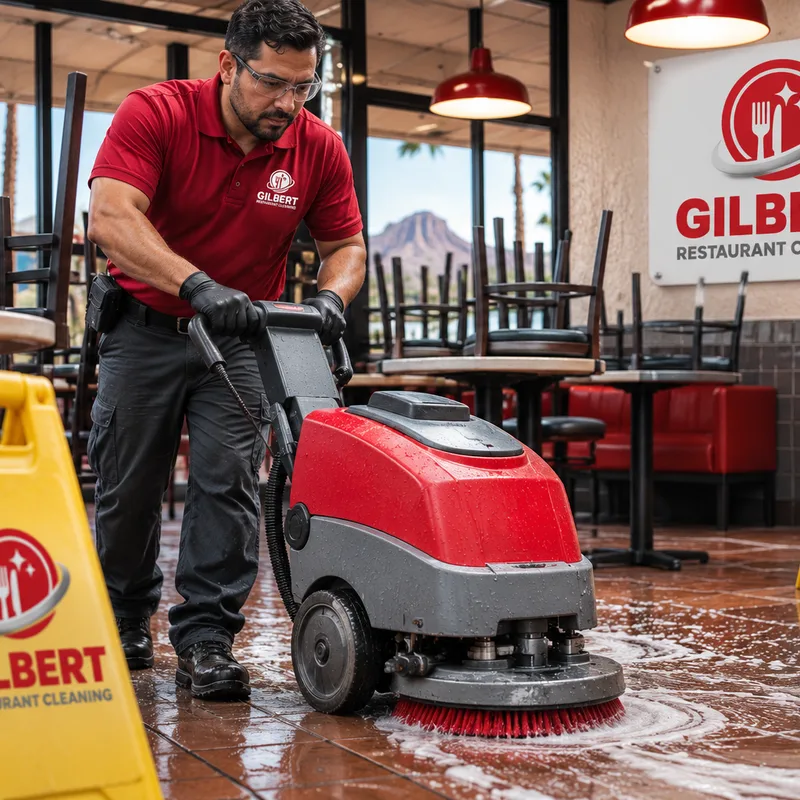
Routine work may include sweeping or vacuuming, damp mopping, edge cleaning, and spot treatment. Periodic service can involve machine scrubbing, grout attention, or finish maintenance when appropriate for the installed floor. Neutral cleaners are often suitable for finished floors, while greasy soil may require a compatible degreaser. Product dilution, dwell time, agitation, and recovery all affect the result.
Wet-floor controls matter whenever work overlaps with employees or vendors. Cleaning is sequenced so floors have time to dry, and caution signs remain in place while surfaces are wet. Entry lanes, routes between dining and kitchen areas, restrooms, and spaces around the bar usually need separate attention because their soil loads differ.